
 Image 1 of 1
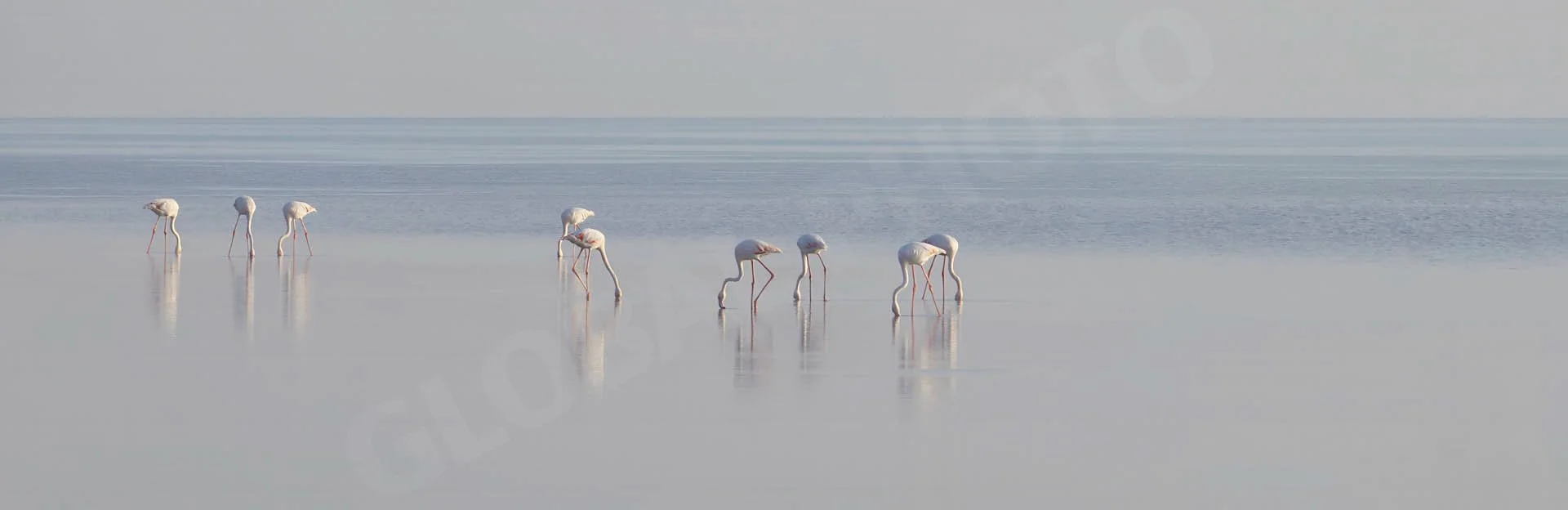
Nicole Forrester, Saudi Arabia, 2024
Large numbers of greater flamingos inhabit the coastal wetlands, mudflats and mangrove islands of Saudi Arabia during the cooler months. Flamingos use a filter feeding method of holding their bills upside down and using their tongues and special combs in their beaks to trap food while letting water out. They stamp their feet in the mud to stir up buried food from the bottom. The sight of graceful flamingos feeding is extremely calming, as they concentrate with their heads lowered and move slowly through the shallows in search of prey. At intervals, they lift their heavy bills out of the water, curve their necks and look up to check their surroundings. These flamingos were located in a peaceful tidal bay near Ras Tanura, where we live in Saudi Arabia.
Medium/Process: Giclee, Paper: Ilford Cotton Textured Archival mounting, Substrate: Dibond, Subframe
Dimensions: 40” x 13” (101.6cm x 33.0cm)
Edition: 2 of 50